![[syndicated profile]](https://www.dreamwidth.org/img/silk/identity/feed.png) cbc_topnews_feed
cbc_topnews_feed
The federal Conservatives are accusing the Liberals of rewarding "Beijing's intimidation" after some parliamentarians on a trip to Taiwan decided to return earlier than planned.
cbc_topnews_feedThe federal Conservatives are accusing the Liberals of rewarding "Beijing's intimidation" after some parliamentarians on a trip to Taiwan decided to return earlier than planned.
cbc_topnews_feed
City officials provide an update on repair work to the Bearspaw south water feeder main.
![[personal profile]](https://www.dreamwidth.org/img/silk/identity/user.png) rachelmanijain_the_pipeline_feed
rachelmanijain_the_pipeline_feedWhat's the worst thing that can happen when you take your new drug candidate into the clinic? One's first thought might be "That it turns out not to do anything", but believe me, that is not the worst outcome, bad news though it is. No, at the bottom of the list is finding out that your compound actually harms patients or even kills them - a rare outcome, to be sure, but not an impossible one by any means and not at all unknown. We'd surely see such disasters more often without the two-species-tox requirements in preclinical testing, but even after clearing (say) rat and dog you can uncover something really interesting about humans that you didn't know before. Save us all from such discoveries.
Short of that, I'd say that the situation described here at Science is the next worse. A small company took an unusual-mechanism drug for Alzheimer’s into the clinic, which sounds like one of those "Stop me if you've heard this one" stories. But that setup has (to date) relentlessly ended with ". . .and guess what? It didn't do anything". But that's not what happened here. The initial readouts for T3D's drug candidate, T3D-959, actually looked pretty encouraging, and I don't doubt that they set off a round of surprised celebration when they came in. As you may have guessed from the name, this is a company focused on the glucose-handling hypothesis of Alzheimer’s ("type III diabetes"), and the drug is a PPAR gamma-delta ligand that was being repurposed for this trial. (I should say here that taking a CNS-acting nuclear receptor compound into the clinic for a neurodegenerative disease is a pretty bold move - the PPAR boom of the early 2000s proved that we really don't understand that biology very well, and we have proven in extravagant detail that we don't understand Alzheimer’s very well, either. These two huge steaming heaps of uncertainty and hidden details are not likely to cancel each other out when piled together).
But mechanism aside, what T3D found when they started looking into the data was horribly unexpected:
But before it trumpeted the good news, the small company took a closer look at detailed data for each participant. It found “a nightmare scenario,” according to a July 2025 legal complaint filed by T3D: The results were “medically impossible.” Some Alzheimer’s patients in the placebo group were reported as improving—even though the disease inexorably erodes cognitive abilities. Many trial participants did not even have the memory-robbing condition, the company claimed, and there was no sign of T3D-959 in blood samples from others who purportedly received it.
That's a $35 million bonfire right there, folks, and I don't think that the lawsuit, even if successful, is going to make the situation whole considering the huge opportunity costs involved. If these accusations are correct, this is about as throughly bungled as a clinical trial can get. Now, I know what you're thinking: that this trial was run by some newly minted CRO in the hinterlands of China or India, and that would give all of us a chance to roll our eyes and make world-weary comments about how you get what you pay for. But that's not what we're looking at there. The CRO involved was founded 25 years ago in New York by a professor from Mt. Sinai hospital, and the trial was conducted at several centers here in the US. Well, South Florida anyway, which one must admit has had a rather fast-and-loose reputation in medical developments from time to time.
But not this loose, not did-we-dose-those-folks-or-not loose. The error bars on human clinical data (especially CNS!) are quite large enough as it stands, thanks, and you don't have to add in too much incompetence to get an absolutely useless stew of numbers. That's one of the other things that surprises me about this situation, that the CRO was willing to send back the data to the company in that condition. Shouldn't a CNS-focused clinical research team have noted the problems before things got to that point? The question is not only what kind of multithumbed minions dosed the patients and collected the data - you also have to wonder about the hapless managers who greenlighted the resulting mishmosh.
It seems to be a recurring problem, though. As you can see from the link above, Science's team found that several of these clinical centers have previously fouled up trial data for other companies and other drugs, and that alone should make any responsible CRO avoid them like radioactive waste zones. But the problems are even deeper. It appears that many of these Miami-area centers are cheerfully enrolling "professional patients" who are signing up for as many trials as possible to collect the payments and benefits, and who are likely as not throwing the pills themselves away. By this point in the article, my head was in my hands, and I'm sure that's a common reaction. This sort of idiotic fraud is the exact opposite of medical research.
It is of course not in the interest of any drug development company to have this kind of nonsense happening - all it does is kill any chances your drug might have had to demonstrate efficacy, and on the off-chance it shows any, it kills any chance of any reputable regulatory authority ever believing it. This business is hard enough already. So don't get your drugs tested in South Florida, folks! And don't assume that South Florida is the only location of such bullshit factories, either. . .
james_davis_nicoll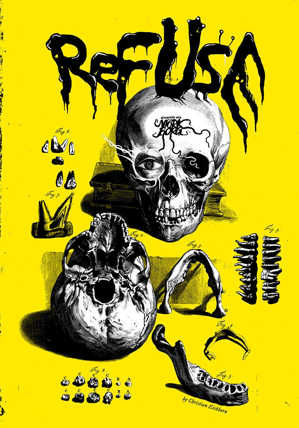 olivermosscbc_topnews_feed
Prime Minister Mark Carney will travel to northern B.C. to meet with Coastal First Nations on Tuesday before departing for China, a government official confirmed to CBC News.
cbc_topnews_feed
Police have charged another man in connection with a 2023 gold heist at Pearson airport, saying he was arrested after flying into the country on Monday.
972mag_feedA New Year’s party by Daraq Crew pushed the boundaries of Palestinian nightlife in Jerusalem, creating space for joy at a time of acute suffering.
The post ‘Here we can be free’: The community revolutionizing Palestinian club culture appeared first on +972 Magazine.
cbc_topnews_feed
Mexican President Claudia Sheinbaum said she ruled out a U.S. military intervention to combat drug cartels, following a "good conversation" on Monday with President Donald Trump on security and drug trafficking.
cbc_topnews_feed
Canada's skeleton team denied accusations by American Katie Uhlaender that Canada's coach sabotaged her chances of sliding in the Olympic Games, while the world governing body of the sport has ordered an investigation.
cbc_topnews_feed
CBC News obtained more than a dozen wiretap recordings from a two-year Colombian federal police investigation into a multinational drug-smuggling organization based out of Colombia. The organization moved cocaine to the U.S., Europe, Asia and northern Africa by air using human drug mules and by sea through shipping containers.
smbc_comics_feed
Hovertext:
This is actually the Heaven and Hell that God promised.
profiterole_readscbc_topnews_feed - Conservatives accuse Liberals of 'kowtowing to Beijing' as 2 MPs cut Taiwan trip shortcbc_topnews_feed - Calgary water main repair updatetwistedchick - (no subject)rachelmanija - I got interviewed about Paper & Clay Bookshopin_the_pipeline_feed - A Clinical Trial Nightmarejames_davis_nicoll - Bundle of Holding: Eichhorn Mork Borgolivermoss - Hockey and HR overlapscbc_topnews_feed - New charges laid in Toronto Pearson airport gold heist investigationcbc_topnews_feed - Carney to meet with Coastal First Nations in B.C., expected to talk major projects: sourceprincessofgeeks - Heated Rivalry reccbc_topnews_feed - New charges laid in Toronto Pearson Airport gold heist investigation972mag_feed - ‘Here we can be free’: The community revolutionizing Palestinian club culturecbc_topnews_feed - Mexico's president says U.S. military intervention ruled out after talks with Trumpcbc_topnews_feed - Canada's skeleton team denies accusations of Olympic sabotage by U.S. slidercbc_topnews_feed - Wiretaps caught Colombian cocaine group discussing Venezuelan military’s ‘Cartel of the Suns’smbc_comics_feed - Saturday Morning Breakfast Cereal - Aftercbc_topnews_feed - Family of woman forced to transfer for medical assistance in dying takes case to courtprincessofgeeks - A thought on Episode 3...Heated Rivalryolivermoss - Unrivaledprofiterole_reads - Ember & Icesyntheid


